Breed-Specific Dog Grooming in Maryville, TN
Every coat type behaves differently under water, under a brush, and under clippers. We match the approach, tools, and technique to your dog’s actual coat — not a generic all-breed routine applied regardless of what’s underneath the fur.
Breed-Specific Dog Grooming in Maryville, TN
A groomer who treats every dog the same way usually isn’t doing anyone any favors — least of all the dog. A Goldendoodle’s curly coat, a Husky’s double coat, and a Schnauzer’s wiry coat all behave completely differently under water, under a brush, and under clippers. Using the same technique on all three either damages the coat, leaves the dog uncomfortable, or just produces a cut that doesn’t hold up.
Breed-specific grooming means the approach, tools, and technique are matched to your dog’s actual coat type — not a generic all-breed routine applied regardless of what’s underneath the fur. It’s the same standard we bring to every full dog groom, and a big part of what keeps a coat from matting between visits.
Why Does Coat Type Actually Matter So Much?
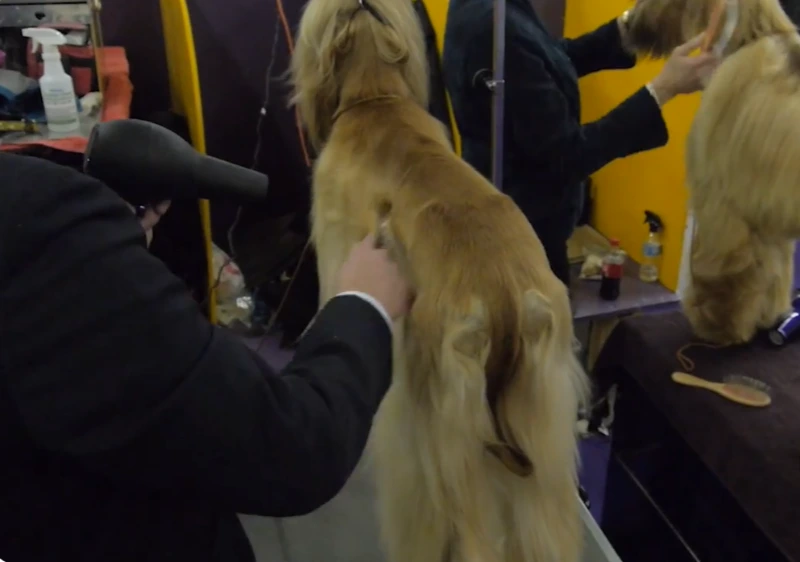
Coat type determines almost everything about how a dog should be bathed, dried, brushed, and cut. A double coat (the kind seen on Golden Retrievers, German Shepherds, and Huskies) has a soft, insulating undercoat beneath a coarser topcoat — shaving it changes how the dog regulates temperature and can affect how the coat grows back, which is why double coats are typically brushed out and trimmed, not shaved, except when matting leaves no safer option. A curly or wavy coat (Poodles, Doodles) doesn’t shed the way a double coat does, which means it mats more easily and needs more frequent brushing and a different clipper technique to avoid pulling. A wiry terrier coat responds best to hand-stripping or specific clipper guards that preserve the coat’s natural texture, rather than a soft clip that can dull it over time.
Getting this wrong isn’t just cosmetic. It can mean a coat that mats faster, a dog that’s uncomfortably hot or cold, or a cut that looks fine on the day but grows out unevenly. It matters even more here in Maryville, where humidity and mud season put extra strain on almost every coat type — a double coat or a curly doodle coat that isn’t cared for correctly will show it faster in our climate than it would somewhere drier.
Matched to What’s Actually Under the Fur
Five coat types, five different approaches. Find your dog’s coat below — and if you’re not sure which one fits, we’ll figure it out together in person.
🐺Double-Coated Breeds
Golden Retrievers, German Shepherds, Huskies, Great Pyrenees, and similar breeds carry two coat layers working together — a dense undercoat for insulation and a longer guard coat on top. Shaving a healthy double coat is generally not recommended except when it’s medically necessary or when matting has left no safer option — the undercoat plays a real role in temperature regulation, and the coat doesn’t always grow back the same way afterward. In Maryville’s humidity, that undercoat is exactly where trapped moisture causes the most matting, which is why regular, thorough brushing and full drying after every bath matters more for these breeds than almost any other coat type — and why we see double-coat matting pick up noticeably during our wetter months.
🐩Doodles & Curly-Coated Breeds
Goldendoodles, Labradoodles, Sheepadoodles, and Poodles have a coat where shed fur mostly stays trapped in the curl instead of falling away on its own, which is exactly why these breeds need more frequent grooming than a lot of new owners expect. Left too long between grooms, this coat type is one of the fastest to mat — and in Maryville’s humidity specifically, that trapped moisture in a curly coat speeds things up even more than it would in a drier climate.
🦴Terrier & Wire-Coated Breeds
Schnauzers, Westies, Scotties, Cairns, and other wire-coated terriers have a coat texture that’s structurally different from both double coats and curly coats — the harsh outer guard hairs are what give these breeds their distinctive look, and that texture changes (usually softening) if the coat is clipped the same way repeatedly over time instead of hand-stripped or maintained with the right tools.
✨Silky & Long-Coated Breeds
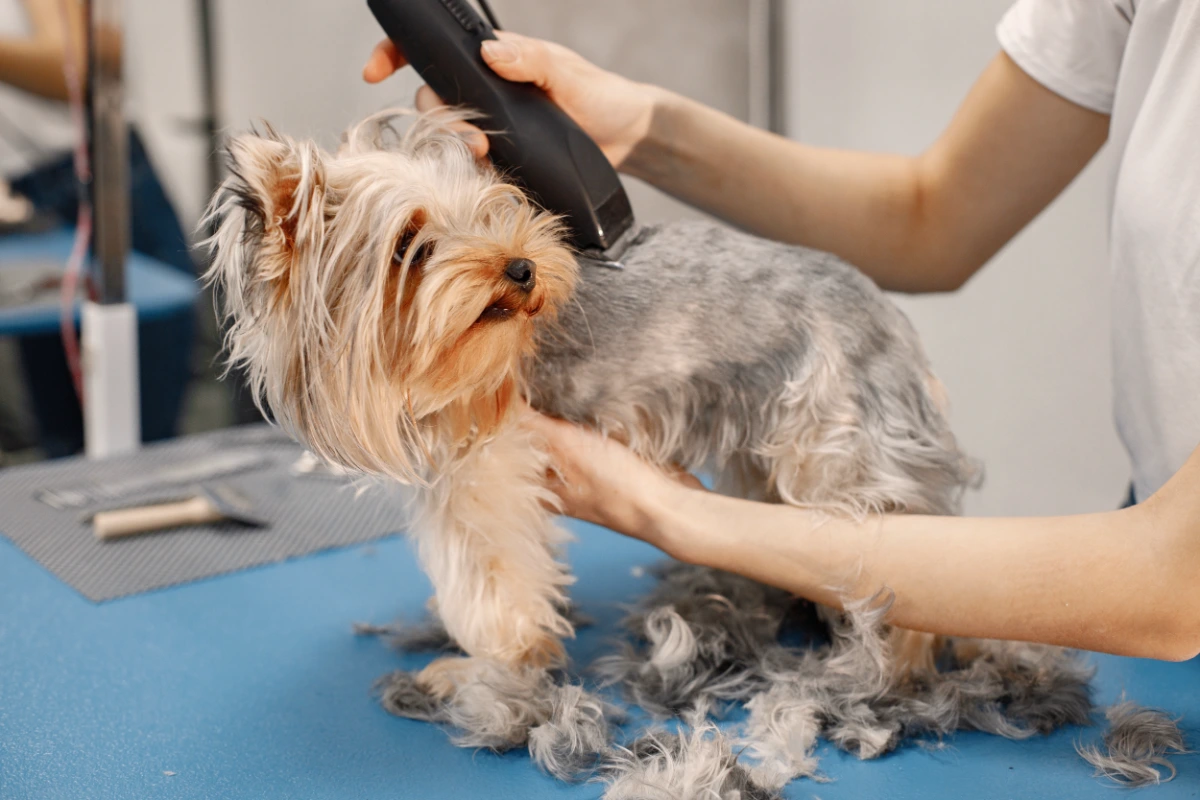
Yorkies, Maltese, Shih Tzus, and other silky-coated breeds have fine, single-layer hair that behaves differently from both a double coat and a curly coat — it mats less from trapped undercoat, but tangles easily from friction (collars, harnesses, dogs that roll around or scratch) and needs consistent brushing to stay smooth. A lot of owners keep these breeds in a shorter “puppy cut” specifically because the longer, breed-standard length requires daily brushing most households don’t have time for — and that’s a completely reasonable choice, not a compromise.
🐶Short-Haired Breeds
Labs, Beagles, Boxers, and other short-haired breeds need less frequent styling, but that doesn’t mean no attention. These coats still shed, and a proper deshedding brush-out reduces loose hair significantly between grooms. Skin and coat checks matter just as much for short-haired breeds, since matting is less of a concern but skin issues from allergies or parasites are just as relevant regardless of coat length.
Flat-faced breeds specifically — Bulldogs, French Bulldogs, Pugs, and similar — have skin folds around the face that need their own attention during a groom, since trapped moisture or debris in those folds can lead to irritation if it’s not cleaned and dried properly. This is a different consideration than coat length and applies regardless of how short or simple the rest of the groom is.
What If I Don’t Know My Dog’s Exact Breed or Coat Type?
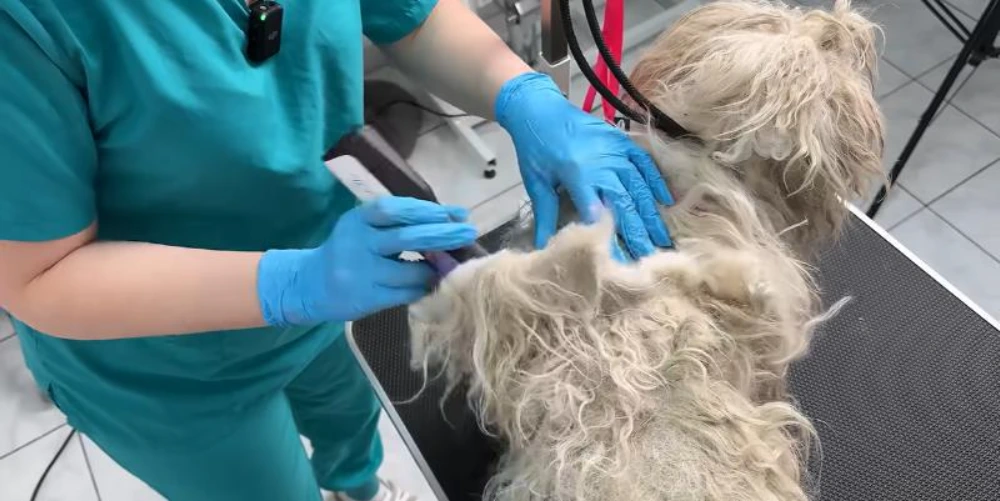
That’s completely normal, especially with mixed-breed and rescue dogs, and it’s not something you need to figure out before calling. We assess coat type in person — texture, density, how it behaves when wet — and base the approach on what we actually find, not just a breed label. This matters just as much for a genuinely hybrid coat (a common result with doodle crosses and mixed rescues, where one section of the coat behaves like a double coat and another behaves like a curly coat) as it does for an unknown breed — either way, we work with the actual coat in front of us.
If you have a photo of a cut or style you like — from a previous groom, a friend’s dog, or even just something you found online — bring it or send it ahead of time. It helps us understand what you’re picturing, and we’ll tell you honestly whether it’s realistic for your dog’s specific coat.
If your dog’s coat has been cut incorrectly in the past — a common situation for coats that were clipped the wrong way for their type — we can usually correct it over one or two visits, depending on how much the coat needs to grow back out first. We’ll walk you through what to expect rather than promise an instant fix that isn’t realistic for the coat’s current condition.
A Couple of Things Owners Always Ask
Does Breed-Specific Grooming Cost More?
Not as a separate line item — breed-specific grooming is simply how we approach every full groom, not an upgrade you have to request. Pricing is based on size, coat condition, and time required, the same as our standard full groom pricing. Coats that require more time due to density, curl, or extensive de-shedding may fall at the higher end of the standard range, which we’ll always explain before starting. See our pricing page for our general service structure.
Can I Request a Specific Style or Cut?
Yes — tell us what you’re picturing, and we’ll let you know honestly whether it’s a good fit for your dog’s actual coat and, if not, what alternative would work better. Some styles genuinely aren’t achievable on certain coat types without either compromising coat health or requiring maintenance most owners aren’t planning for, and we’d rather have that conversation upfront than deliver something you didn’t actually want.
Groomed for Your Dog’s Coat, Not a Generic Routine
Every coat type needs something a little different, and getting it right makes a real difference in how your dog looks, feels, and holds up between grooms. Tell us about your dog, and we’ll walk you through what we’d recommend.